

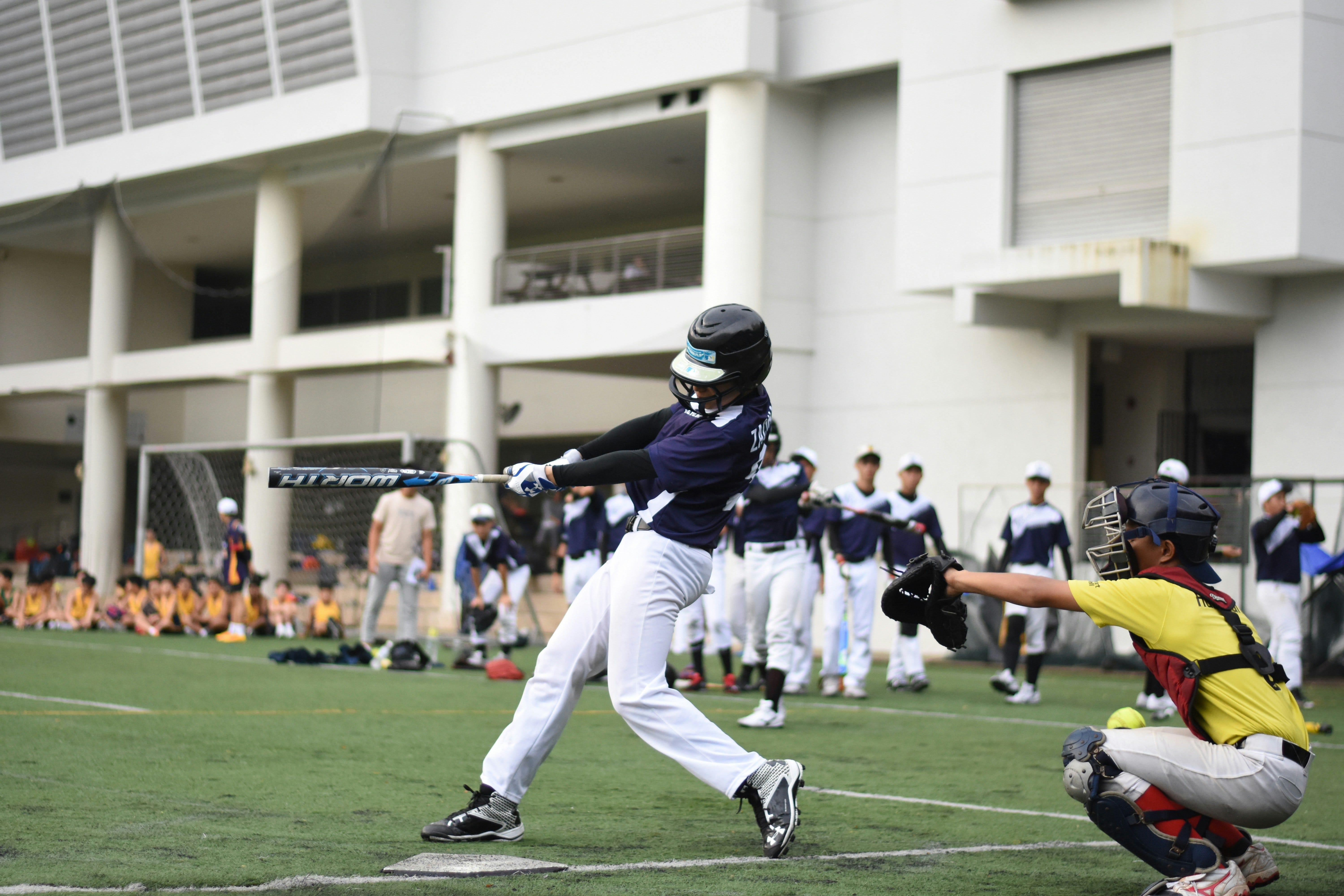
There is a glaring gap in skill development in youth sports. Worst still, this gap concerns the activities that comprise the majority of the time spent on the court or on the field. A consistent observation shared by colleagues in various sports across different parts of the world is the continuing decline of athleticism and foundational movement skills in the junior ranks up to and including college level. What is notable is that they report no such decline in skill development when it comes to the specific skills involved in the sport (ball skills, racquet skills, stick handling, etc.). In other words, kids still exhibit good technical skills within the context of the sport yet they are increasingly lacking when it comes to the basics. So what can we attribute this stark difference to? The reason is simple: they are proficient within this narrow set of technical skills because these are the elements that are coached and practiced regularly.
Traditionally, practices and skill development in general within youth sports have focussed almost exclusively on technical and tactical aspects. Athletic skills and general motor skill development have been largely overlooked. Excluding the dwindling number of coaches who have a background in physical education, for the most part athletic skill development is not covered in any meaningful way in coach education, particularly in the case of ‘skill sports’ (i.e. team sports, racquet sports, etc.).
We might have got away with this when sports coaches were able to rely on the natural athleticism that young performers brought to the party. Unfortunately, we are now forced to reckon with these omissions, as is becoming increasingly evident at all levels across a range of sports.
Aside from the fact that athletic skills are not specifically catered for in sports practice, free play among children and adolescents is declining with each generation. With less and less opportunity to naturally develop these skills through exploration (jumping over and onto things, falling off them), mastery of the general motor skills that are foundational to sport is declining at all levels.
To compound this, there has been a parallel decline in physical education within schools. Over recent decades the physical education teaching profession has been neglected, meaning that this expertise is in short supply just when we need it the most. The situation is particularly bad in public schools. Here in British Columbia, most kids will not encounter a specialist physical education teacher until they reach middle school or even secondary school.
Participating in organised youth sports does not confer the same natural development (i.e. without coaching) of general motor skills that previous generations used to get from endless hours engaged in free play. Organised sports practices are far more confined; there is much less variety and much less room for exploration. These opportunities are further reduced when kids only participate in a narrow range of sports early on and opt to specialise early, as this further narrows the bandwidth of the motor skill elements and movement challenges they are exposed to.
Whilst long-term athlete development models and those engaged in talent development pathways make vague references to fundamental skill development and physical literacy, we have failed to make the point strongly enough. The need has not been articulated in terms that better allow coaches, parents and the athletes themselves to appreciate just how vital athletic skill development is for youth sports.
At present, most of the attention goes to skill development for the techniques that are specific to the sport, such as swinging a bat or striking a ball. Performers spend hours engaged in practice to acquire and hone these narrowly defined sport skills, whereas foundational motor skills and athletic movement skills are given only cursory attention or left to chance entirely. When we examine the relative time spent engaged in the respective activities on the court or on the field, this starts to seem nonsensical
Let us take ‘net’ sports such as tennis or volleyball as an example. The relative time players spend interacting with the ball is a fraction of playing time. The remainder of the time players are engaged in repositioning themselves as they react to where the opponent has struck the ball, covering the court to intercept the ball, getting into position to play the shot and then recovering to position themselves to receive the next shot in the rally. Each of these elements constitute athletic skills. If we conduct the same analysis in team sports, the disparity between time spent in possession of the ball versus engaged in activity ‘off the ball’ is greater still.
There is a false separation between sports skills and general motor skills and athletic capabilities. To put it more simply, athletic movement skills are sport skills.
Often what is holding young athletes back the most is deficiencies in their general motor skills and athleticism. More practice or technical instruction will not solve this. Not only are athletic movement skills a major component of most sports, foundational motor skills comprise the building blocks of the specific sport skills and techniques in any given sport. Gaps in their general motor skill development will ultimately limit the young athlete’s ability to execute and master the skills of the sport.
Beyond the need to ensure that young performers are capable of performing the full array of activities in the competition arena, the need to develop these capabilities is evident from a sports injury viewpoint. Suboptimal movement mechanics are implicated in the common non-contact injuries in youth sports, particularly overuse injuries. A greater level of athletic skill mastery not only reduces wear and tear but also allows performers to avoid and escape high risk scenarios.
Our objective should be to equip kids to first become an athlete, before we concern ourselves with optimising their development for whatever sport they might want to pursue. This starts with engaging in a diverse array of sports early on to develop the full spectrum of foundational motor skills and the various dimensions of athleticism. To continue this development, we need to find ways for kids to participate in different sports during the year for as long as possible before specialising in their chosen sport to the exclusion of others. Even later on, strategic use of donor sports can help to develop relevant capabilities for their chosen sport.
Following the revelation that the majority of the time spent on the field or court is engaged in athletic sport skill movements rather than executing technical sport skills, it quickly becomes apparent that we should allocate practice time accordingly. Dedicated development for athletic skills should be considered a necessity for young performers, irrespective of their primary sport.
If we are to devote practice time to developing kids’ athletic skills, then this will require coaching. Given recent trends, it is likely that there will be gaps to fill, even for kids who have a multi-sports background. In many cases, there will be a need for remedial work as well as dedicated development for the athletic skills that are most integral for their chosen sport. As with technical sports skills, acquiring and refining the relevant athletic skills and general motor abilities for the sport will require coaching input and feedback to facilitate the process. Enlisting the right coach is critical in this regard. For the most part, this is uncommon expertise, particularly among private coaches and personal trainers. So choose well…
Part of why the skills deficit persists is that almost nobody measures the fundamentals, so it stays invisible until it shows up as injury or a plateau. We obsess over outcomes — wins, rankings, highlight clips — because those are easy to see, while the underlying movement quality goes unrecorded. Working in athlete data, the pattern I keep hitting is that what doesn’t get measured doesn’t get coached, and what doesn’t get coached quietly compounds. You can’t close a gap the system was never set up to notice in the first place.
How well do you think playing multiple sports ("multi-sport development") covers the gap towards general athletic skills? How different or complementary do sports need to be to have a good effect? I encourage soccer players to play an overhead or throwing sport (volleyball is usually an easy sell for girls); and runners to do something with short multidirectional movements like tennis and, increasingly even with kids, pickleball. But I'd rather they just mess around and "be kids" in my old-school 80s kid kinda way 😂.